Workflow | Portals (Supplier Portal, Media Portal, Sales Portal | AI (product expert/co-pilot/auto-translation) | Digital Shelf |
Media Management | Sustainability(DPP & EPD) | SAP
Workflow | Portals (Supplier Portal, Media Portal, Sales Portal | AI (product expert/co-pilot/auto-translation) | Digital Shelf |
Media Management | Sustainability(DPP & EPD) | SAP
PIM vs. MDM: Key Differences, Integration, and When You Need Each
Share This Post
Table of Contents
Few acronym pairs cause as much confusion in digital projects as PIM and MDM. Both show up in the same RFPs, often in the same sentence, and both promise essentially the same thing: reliable, consistent data. For manufacturers and distributors planning their system landscape, the distinction is anything but academic. Get it wrong and you either buy a tool too small for the problem or too large for it, and both mistakes cost time, budget, and eventually trust from the business side.
What Is a PIM System?
A PIM (Product Information Management) is the central platform where you bring together product data from ERP, suppliers, editorial teams and technical systems, enrich it, and distribute it to every channel: online store, marketplaces, catalogs, ERP feedback loop, PDF data sheets. The driver is commercial, not technical. Marketing and product teams maintain descriptions, images and attributes directly in the system, without opening an IT ticket for every change. That proximity to the business is exactly why PIM is usually quick to implement, typically within a few months rather than years.
What Is an MDM System?
An MDM system (Master Data Management) has a much broader ambition. It creates one dependable version of the truth, the Golden Record, for every business-critical data domain: customers, suppliers, locations, materials, and, as one domain among several, products. MDM is usually IT-led and owned enterprise-wide, because it has to enforce rules, matching logic and governance across department lines. That reach is both its strength and its cost. MDM programmes need more lead time, more cross-functional alignment, and typically a bigger budget than a PIM rollout.
PIM and MDM Side by Side
Criterion
PIM
MDM
Primary focus
Product data for marketing & sales
All critical master data domains
Driver
Business (marketing, e-commerce)
IT / Chief Data Officer
Typical rollout time
3–6 months
12–24 months
Core function
Enrichment, translation, syndication
Golden Record, deduplication, matching
Data direction
Consolidates product data channel-ready
Consolidates master data enterprise-wide
Typical owner
Head of Digital / Product Management
CDO / Enterprise Architecture
The Five Core Differences in Detail
Scope is the most obvious difference, but not the only one. MDM is an enterprise-wide initiative spanning every data domain, while PIM is purpose-built for product commerce and usually stays owned by a single business function. That split also decides who owns the variant structure. Just as important is the depth of governance: MDM enforces matching rules, merge logic and historisation across system boundaries, while PIM mainly ensures completeness, consistency and channel readiness of individual product records.
Tooling reveals the third difference. PIM systems ship with capabilities MDM platforms rarely have, such as media asset management, multilingual translation workflows, or direct export channels to marketplaces. MDM platforms, in turn, bring matching algorithms and deduplication logic that a PIM does not need, because it usually works with product master data that has already been disambiguated.
The fourth difference concerns time to value. A PIM project often shows measurable results within a quarter, such as shorter time-to-market for new products. An MDM programme delivers its value more gradually, domain by domain, and the full benefit typically only shows up after one to two years of consistent governance work.
The fifth, and in practice most underestimated, difference is decision ownership. In PIM, the business function largely decides attribute models, categories and copy blocks on its own. In MDM, any change to core entities such as the customer definition requires alignment across several departments, because mistakes there immediately ripple into CRM, ERP, finance and reporting.
Where PIM and MDM Overlap
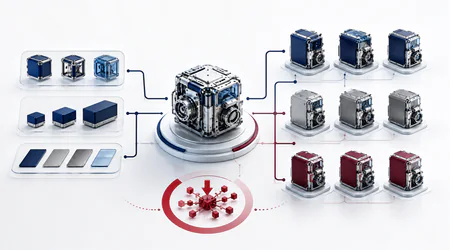
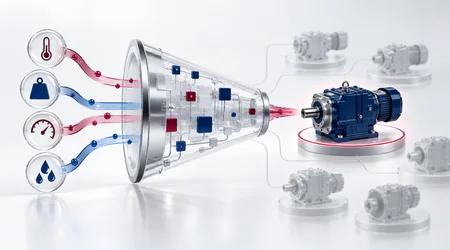
Product data is one of the domains MDM manages, and that is exactly where it meets PIM. In a well-designed architecture, MDM delivers clean, deduplicated product master data, and PIM takes that as its starting point to enrich it channel by channel: marketing copy, images, technical attributes, translations. For quoting and pricing on top of it, see configurable products and system roles. For how that Golden Record logic works in detail, see What Is a Golden Record?. The role split matters here: MDM is the source of truth for identifiers and master attributes, PIM is the stage for everything that makes a product sellable.
Three Integration Architectures in Practice
MDM-first: the MDM system is the single source for product master data, and PIM receives filtered, already cleansed records to enrich. This pattern fits companies with many product sources, for instance after mergers or with strongly federated purchasing organisations, because duplicates are sorted out before they ever reach PIM.
PIM-first: the PIM is the operational data owner for products, while an MDM exists for other domains such as customers or suppliers, but not for products themselves. This fits companies with a manageable, well-maintained product base where deduplication is not a central problem.
Parallel operation with a defined interface: both systems run side by side, connected through a clearly defined synchronisation layer, usually via APIs or an integration layer. This is the most demanding variant, but also the most scalable, and it is the typical setup for large, internationally active manufacturers running multiple ERP instances.
When Do You Need PIM, MDM, or Both?
PIM alone is enough if you have one manageable product domain, sell across multiple channels, but customer, supplier and location data is already clean enough to run without a dedicated governance programme. That is the typical starting point for mid-sized manufacturers on a single ERP instance.
MDM without a dedicated PIM is rarely the right call in practice for manufacturers and distributors, because product data is usually the area under the most commercial pressure. It happens when product data is not the core business, for instance for pure service providers with a few stable product categories.
Both systems become necessary when a growing, variant-rich product portfolio meets several critical domains that must stay consistent: multiple ERP systems after acquisitions, international growth with local sales entities, or regulatory pressure such as the Digital Product Passport, which demands reliable master data across the entire supply chain.
A Practical Example: A Manufacturer With Three ERP Systems
A mid-sized tool manufacturer grows through acquisitions and ends up running three ERP systems, each with its own product numbering. Without MDM, a PIM project would fail at this point, because the same drill exists under three different item numbers with slightly diverging technical data. The company therefore implements a lean MDM first, one that reconciles the three product bases, identifies duplicates and produces a cleansed data set. Only then does the PIM take over that cleansed base and build channel-ready, multilingual product pages from it. The order matters, because doing PIM first would have simply passed the duplicate problem through to customers.
Common Mistakes During Implementation
The most common mistake is buying PIM as a substitute for missing data quality. A PIM can enrich product data, but it does not solve structural duplicate problems, that requires MDM functionality or at least a cleanup before migration. The second common mistake is the reverse expectation, starting an MDM project and hoping it will also improve product communication along the way. MDM builds consistency, not sellable copy, images or categorisation, that remains PIM’s job. The third mistake is failing to settle the ownership question before the project starts. When IT and the business cannot agree on who has the final say in conflicts, it delays every system rollout by months.
Functionally, yes: PIM is a specialised, product-focused subset of what MDM delivers across every domain. Organisationally, the two are still often implemented and owned separately, with different teams and budgets.
Yes, and many companies start exactly that way because PIM delivers value faster. Once product data sources multiply, for instance through acquisitions or new suppliers, MDM becomes relevant to catch duplicates before they reach PIM.
It depends on data quality. With clean, unambiguous product master data, PIM can come first. With multiple source systems and duplicate risk, MDM should be prioritised for the product domain at least, see the practical example above.
PIM projects are typically significantly cheaper and faster, because they are business-led and functionally narrower. MDM programmes require more cross-departmental alignment and therefore higher project costs, but deliver enterprise-wide value in return.
The Golden Record is the output of MDM: one dependable record per entity. PIM uses that Golden Record for products as its starting point and enriches it channel by channel, for example with marketing copy and images.
We use cookies and similar technologies to ensure the functionality of our website and to improve content. We use cookies and similar technologies to ensure the functionality of our website and to improve content. For the latter, pseudonymised data from visitors is collected, e.g. analysed for purposes of statistics passed on to partners for remarketing. By clicking “Accept all”, you consent to the storage and reading of information on your end device and to the further processing of personal data (e.g. your IP address) and potentially its transmission to services, including in third countries. By selecting “Strictly necessary for technical purposes”, you refuse the use of services that require consent. You will find details under “Customise”, and the option to consent to individual categories.. You can revoke consent you have given at any time via “Privacy settings” in the Privacy policy.
Please select your language before accepting cookies :
Mandatory
Always active
These cookies are needed for a smooth operation of our website.
External
Content from video and social media platforms is blocked by default. Consent to external media here to view all external media without further manual approval.
Statistics
The technical storage or access that is used exclusively for statistical purposes.The technical storage or access that is used exclusively for anonymous statistical purposes. Without a subpoena, voluntary compliance on the part of your Internet Service Provider, or additional records from a third party, information stored or retrieved for this purpose alone cannot usually be used to identify you.
Marketing
The technical storage or access is required to create user profiles to send advertising, or to track the user on a website or across several websites for similar marketing purposes.